

The Science of Dance: How Movement Supports Brain Development in Children
The Power of Dance and Brain Development in Children
Dance and brain development are deeply connected from the very first twirl a toddler takes. More than a physical activity, dance stimulates a child’s cognitive, emotional, and social growth. Scientific studies support what dance educators have long observed: regular movement, when guided with purpose, plays a vital role in shaping developing minds. At NorthPointe Dance Academy, every plié, leap, and choreographed routine is carefully designed to benefit both the body and the growing brain.
If you’re a parent evaluating how dance fits into your child’s learning journey, understanding this relationship can offer valuable insight. Starting—or continuing—a dance education may be one of the most impactful decisions you make for your child’s development.
How Dance Stimulates Brain Growth in Children
When children dance, their entire brain lights up. Movement activates motor coordination, strengthens memory, and encourages creative problem-solving. Dancing to music helps develop rhythm and coordination while also enhancing auditory processing, spatial reasoning, and language skills. In short, dance and brain development go hand in hand to provide a full-brain workout.
Neuroscience shows that dance stimulates critical areas including the basal ganglia (movement regulation), cerebellum (balance and timing), and hippocampus (memory retrieval). During early childhood, when the brain undergoes rapid growth, these neural pathways are especially receptive to movement-based learning.
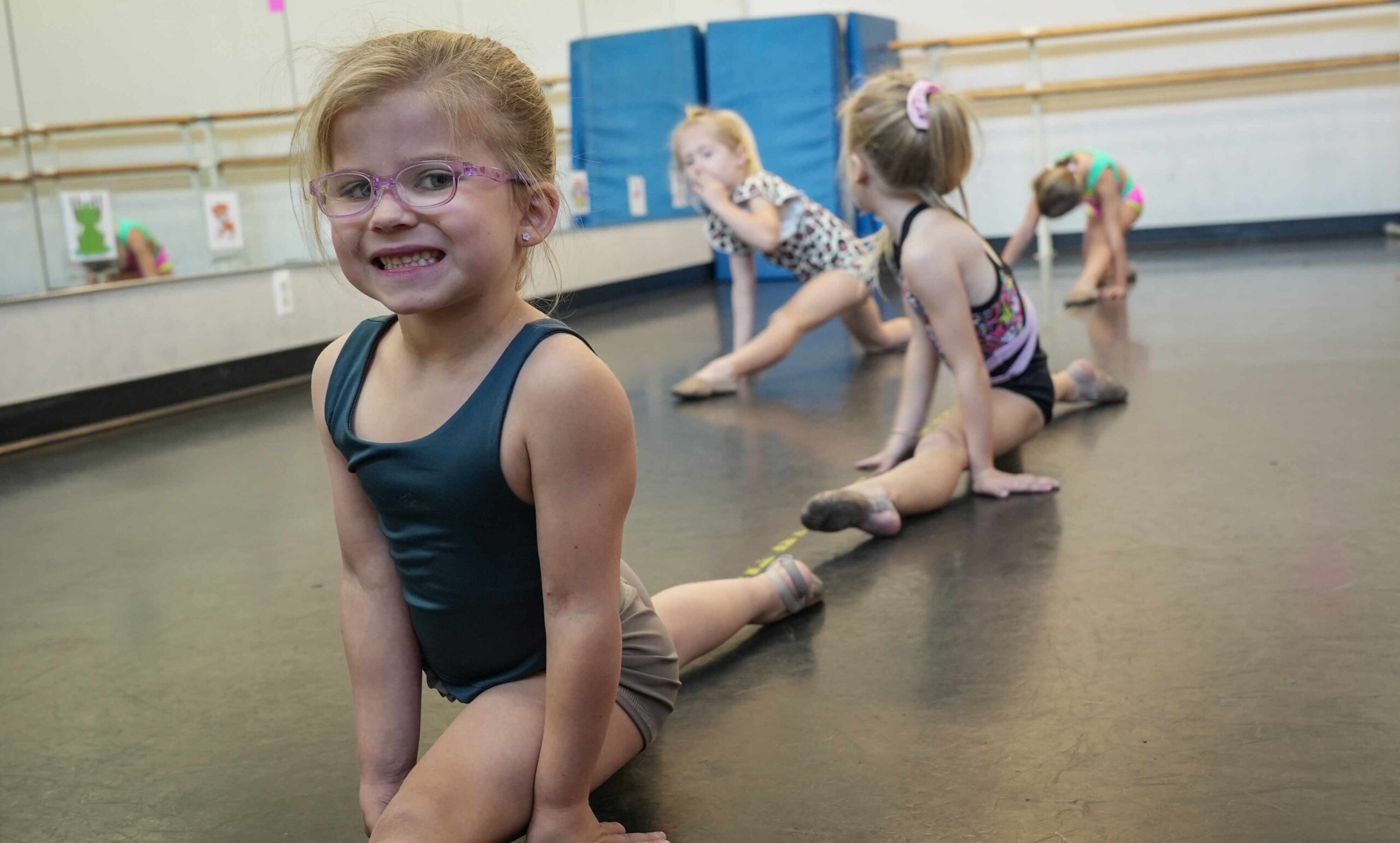
Young dancers in NorthPointe’s Preschool classes strengthen working memory and attention span through simple movement patterns. Sequencing steps to music supports early literacy and numeracy—laying the groundwork for future academic success.
Dancing Builds Emotional Intelligence
Beyond academics, dance education plays a direct role in emotional growth. Movement lets children express feelings they may not yet have words for. Learning choreography helps students embody stories and characters, increasing empathy. Improvisation develops resilience and risk-taking skills. Group routines foster teamwork and trust among peers.
At NorthPointe Dance Academy, emotional intelligence is nurtured in every class. Instructors intentionally create an inclusive, supportive studio environment where students feel safe to express, connect, and explore. These strong teacher-student bonds build self-confidence, which is crucial for both learning and personal growth.
In Elementary Jazz, for instance, students are not just memorizing routines—they’re learning to manage frustration, show sportsmanship, and celebrate peer successes. These skills extend well beyond the studio and into classroom behavior and social circles.
Dance and Academic Success
Surprisingly to many, dance and brain development also link directly to academic gains. Rhythm-based physical activities promote executive function skills such as focus, problem-solving, and planning. These are essential tools for school achievement.
NorthPointe’s dance curriculum blends technique with creativity, supporting structured and open-ended learning. Weekly attendance improves time management and concentration. Parents often report that dance helps children succeed in subjects like math and reading, thanks to the pattern recognition and sequencing involved in choreography.
Whether students are counting beats in tap class or navigating spatial movement in ballet, they’re practicing logic, memory, and attention—skills that translate directly to the classroom.
What Dance Supports at Every Age
Understanding how dance and brain development align at different ages can help parents choose the right time to begin:
- Preschool (ages 3–5): These early years are optimal for building motor control, language processing, and imagination. NorthPointe’s classes feature fun, age-appropriate movement that also supports early cognitive benchmarks like counting and letter recognition.
- Elementary (ages 6–10): Trickier steps and routine memorization support memory, cooperation, and focus. Programs like ballet and jazz reinforce discipline, working memory, and teamwork.
- Middle School (ages 11–13): As identity and self-expression evolve, dance provides a positive outlet for emotional exploration. Collaborative choreography builds peer connection and self-awareness.
- Teens (ages 14+): Leadership, creativity, and mental agility take center stage. Many teens help assistant-teach younger classes, deepening neural connections and reinforcing concepts through mentoring roles.
By matching instruction to students’ developmental milestones, NorthPointe helps dancers build not only physical skills but also long-term cognitive and emotional competence.
How Parents Can Boost Brain Growth Through Dance
Parents play an essential role in helping children get the most from dance and brain development benefits. Consider the following strategies to enhance your child’s experience:
- Select a high-quality studio: Look for programs like NorthPointe Dance Academy that offer age-appropriate classes, caring instructors, and an intentional progression that supports the whole child.
- Promote regular attendance: Consistency helps reinforce neural pathways, improve memory, and build emotional security through routine.
- Engage after class: Asking your child what they learned boosts critical thinking and language skills. Reflecting on choreography also strengthens memory.
- Focus on effort: Celebrate progress rather than perfection. Acknowledge your child’s persistence, which helps build grit and a growth mindset.
Whether your child is in their first dance class or preparing for auditions, intentional support at home amplifies both the fun and the brain benefits of dance.
NorthPointe Dance Academy: Where Movement Meets Mind
Located in Lewis Center, Ohio, NorthPointe Dance Academy is dedicated to nurturing the whole child through a balanced blend of movement, creativity, and care. From a preschooler’s playful skip to a teen’s polished performance, each lesson is designed with attention to both body and brain.
At NorthPointe, students build community, character, and confidence—making dance class a transformative part of their lives. The science is clear: dance and brain development go hand in hand. But just as important is the heart behind every movement. Families across Central Ohio trust NorthPointe not only for quality dance education but for life-shaping experiences.
Curious about how dance can empower your child’s learning and emotional growth? Explore NorthPointe Dance Academy’s programs today and see how joyful movement supports lifelong development.